
Google Search Console Releases Platform Properties: How This Redefines What "SEO" Means
Google's new platform properties feature brings social content into Search Console for the first time. But this isn't just a measurement tool, it signals a fundamental shift in how search, SEO, and social media are converging.
Authored by Callum Steenson | 24th July 2026For two decades, Google Search Console has been the domain of website owners. If your content lived anywhere else (social platforms, video channels, or creator accounts), it existed in a separate, largely invisible universe.
That just changed.
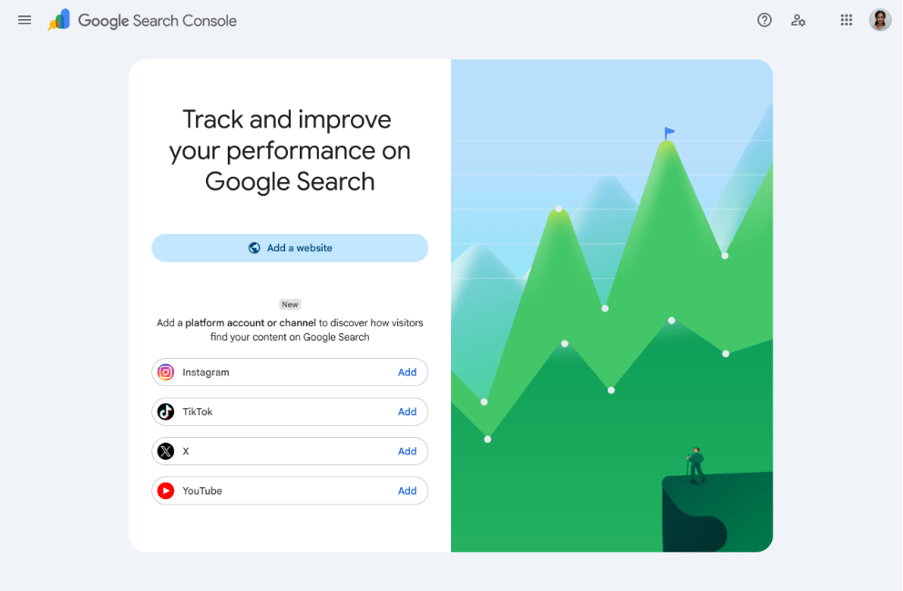
On July 7th, Google introduced platform properties, a new Search Console property type that lets creators and publishers verify their Instagram, TikTok, X, and YouTube accounts and see exactly how those posts perform in Google Search and Discover. For the first time ever, Search Console is now measuring content you don't host on your own domain.
This isn't simply a convenience feature. It's evidence that Google is systematically blurring the line between social platforms and search. And for anyone working in SEO, digital marketing, or content strategy, that should prompt serious rethinking about what SEO actually means in 2026.
What's Actually Happened?
Platform properties let you link your social accounts directly to Search Console and see which search terms drive people to your posts. You can track impressions, clicks, click-through rate, and average position, just like a website property.
Until now, the gap was real. Your Instagram posts could rank in Google Search. Your TikTok videos could appear on Discover. But you had no data about it. You couldn't see which search queries led to your content. You were flying blind.
Now, that blind spot is closing.
Why This Matters More Than Measurement
Here's what makes this significant: the people who need this data most have been least served by Search Console. Enterprise brands with large websites always had visibility. But creators, influencers, publishers whose primary distribution channel is TikTok or Instagram? Search Console was irrelevant.
Platform properties change that.
A creator can now see how many followers (or new audiences) discovered them through Google Search.
A brand building thought leadership on LinkedIn or X can understand how posts perform in search.
A publisher can measure whether their social strategy creates discoverable, search-optimised content or just optimises for platform algorithms.
This creates real commercial value. If you're monetising through views, understanding search traffic from social content is directly linked to revenue.
What Google Is Really Signalling
But there's something more important here.
Google is moving from passively surfacing social content to actively instrumenting it.
By bringing platform properties into Search Console, Google is saying: "We want creators and publishers to care about search visibility for their social content. We want you to optimise for it."
That's a fundamentally different posture. It moves from "we happen to surface your social content" to "search visibility for social content is a primary channel we're investing in."
The Bigger Strategic Picture
Look at Google's moves over the last eighteen months:
- AI Mode introduced search experiences where Google answers questions directly without showing traditional results.
- Universal Commerce Protocol enabled AI agents to discover and purchase products within the search experience.
- Search Profiles (June 2026) created public pages consolidating creator content across platforms.
- Platform properties (July 2026) now treat social accounts as first-class search properties.
What's the through-line? Google is systematically expanding what "search" means. It's no longer just websites ranking for keywords. It's social posts surfacing in search results, video content prioritised in Discover, creator accounts becoming discoverable entities, and AI agents completing tasks within the search experience.
SEO isn't expanding because Google is feeling generous. It's expanding because Google's business model depends on being the primary interface through which people discover information and complete tasks, regardless of where that information lives.
What You Should Do With This?
If you're a creator or influencer: Connect every account where you publish substantive content. Use this data to understand which content types and topics resonate in search versus platform algorithms. If your goal is reach and discoverable authority, platform properties reveal whether your social strategy serves that goal.
If you're a brand publishing on social channels: Most brands still treat social media as separate from SEO. Platform properties should force that conversation. If your brand publishes on Instagram, LinkedIn, or X, you now have data on how those posts surface in Google Search. If posts about a particular topic consistently rank well in search, that's a signal to double down on that area.
If you're an SEO leader: For years, SEO has been defined by website optimisation. But your data sources (organic visibility, search traffic, search discovery) are increasingly coming from platforms you don't control.
That means SEO strategy needs to expand beyond your owned domain to include how your brand's content on social platforms appears in Google Search and Discover, whether content designed for social sharing is also discoverable in search, and whether your content strategy serves both social algorithms and search discovery.
For enterprise brands, this might mean integrating platform property data into your SEO measurement dashboards and reconsidering whether certain content should live on your owned site or on social platforms.
The Measurement Shift
Traditional SEO measurement is becoming fragmented. For decades, Search Console was the single source of truth. Now your brand's search visibility is split across website Search Console data, platform properties, native platform analytics, and Google Analytics.
Your website might be declining in search visibility while your social content is gaining.
Your Instagram posts might be driving significant search traffic, but you wouldn't see it in traditional Search Console reporting.
This creates an opportunity: teams that integrate platform property data into their SEO dashboards will have better visibility than competitors who only track website performance.
Getting Started
Setup is straightforward:
- Open Search Console
- Click "Add property," select your platform (Instagram, TikTok, X, or YouTube), and authenticate.
Within a few days, you'll see three reports:
- Performance: detailed metrics by post and query
- Insights: trends and top performers
- Achievements: growth milestones
The most valuable insight: which queries drive people to your social content.
This tells you what topics have search demand and which of your content serves that demand. Use this to inform future content strategy.
Why This Matters for SEO's Future
Google has made a coherent, strategic choice: systematically integrate social content into its search ecosystem.
Why?
User behaviour is driving it.
People use social platforms as search engines. Social platforms have become primary content sources. There's a commercial opportunity in expanding search surfaces. And AI models like Gemini need social content as raw material for synthesised responses.
For marketers, this means social content optimisation is becoming a core SEO responsibility.
The Broader Implication
The traditional SEO functions of monitoring rankings, optimising website content, managing Search Console, is expanding into a much broader mandate encompassing social content discoverability, AI-generated answer optimisation, commerce enablement, brand entity optimisation across platforms, cross-platform content strategy, and measurement across fragmented data sources.
Most organisations haven't caught up.
They still have siloed teams: one for website SEO, one for social media, one for paid search, one for analytics.
Platform properties will force rethinking.
Content strategy, search visibility, and social distribution need to work together.
Teams that figure this out early, that integrate social content into their SEO strategy and measure search visibility across all channels, will have a genuine competitive advantage.
Final Thoughts: Platform Properties Are Bigger Than They Look
Google Search Console platform properties look like a simple measurement tool. In reality, it's a signpost pointing toward how search, SEO, and content strategy are converging.
This isn't the first time Google has expanded what "search" means. It's happened gradually for years. But platform properties are explicit: Google is saying that social content is now a legitimate part of the search ecosystem, and creators and brands should measure and optimise for it.
That means:
- If you're a creator, connect your accounts and use this data to understand your search audience.
- If you're a brand, integrate social content performance into your broader search strategy.
- If you're an SEO leader, start planning how social content fits into your optimisation roadmap.
- If you're in digital marketing more broadly, recognise that the line between "social" and "search" is disappearing.
The future of SEO isn't just about ranking websites. It's about ensuring your content, wherever it lives, is discoverable when people search, whether that's through traditional Google Search, Discover, AI Mode, or any of the other surfaces Google continues to create.
Platform properties are a tool for that.