

Shopify Is Changing Ecommerce Search Rules
Shopify and Google’s new partnership is reshaping ecommerce search, changing how products are discovered, ranked and purchased in AI-driven experiences.
Authored by Ben Day | 7th May 2026Shopify and Google announced a deepened partnership at the start of 2026 that doesn’t just add a new feature to a familiar platform, it signals a much bigger shift in how products are discovered online.
For brands selling through Shopify, and for anyone thinking seriously about search visibility, this is a pivotal moment.
A new format for how products are found within Google
The headline of the announcement was the Universal Commerce Protocol (UCP). A new open standard co-developed by Shopify and Google that creates a shared language for commerce data.
Instead of every platform and AI assistant building bespoke integrations with retailers, UCP introduces a single standard for accessing product data in real time. This includes pricing, availability, variants, shipping and returns, all pulled live and structured, ready to be read by any AI system that supports the protocol.
You can read more about the announcement on Shopify’s official update.
Commerce in search is changing
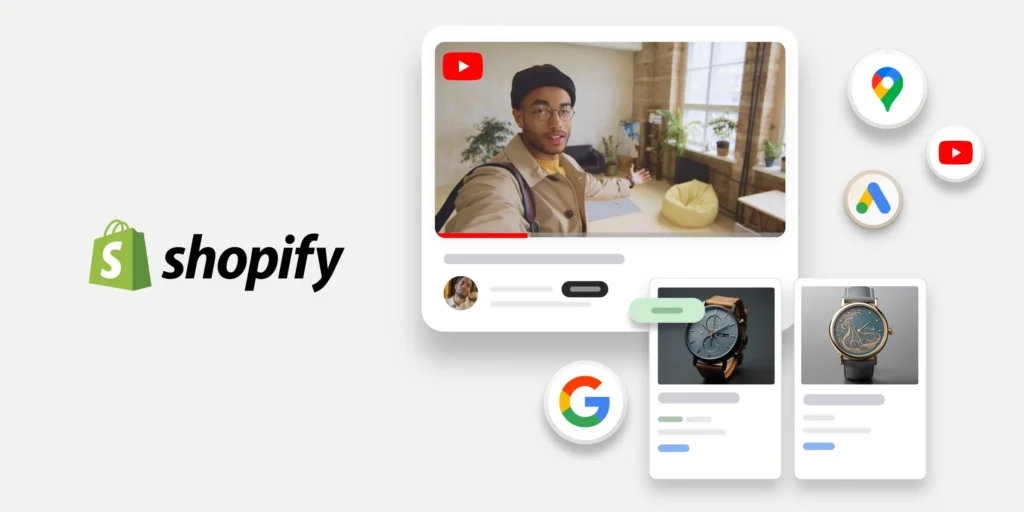
Alongside UCP, Google has begun rolling out native shopping inside its AI Mode and within the Gemini app. What this means in practice is that a shopper can now ask a question, receive an AI-generated recommendation, and complete a purchase, all without ever clicking through to a brand’s website.
Conversation to checkout. No homepage visit, no product page, no traditional funnel.
More on how this works within Google’s ecosystem can be found here.
What’s important here is that this isn’t a future scenario. It is already rolling out, and Shopify merchants with well-structured data and active integrations are the ones being surfaced in those moments.
For SEO, this matters enormously. The goal has always been to get the right product in front of the right person at the right moment. That hasn’t changed. What has changed is the path that connects them.
What this means for search visibility
The weight of product data has increased dramatically
In traditional search, ranking came down to how well your pages were optimised, copy, metadata, links and site structure. In this new environment, the quality of your product data carries that same weight.
Vague descriptions, incomplete attributes or stale pricing are no longer minor gaps. They are the reason an AI system passes over your product and recommends a competitor’s. If an AI system cannot confidently describe your product to a shopper, it will not surface it.
Google Merchant Center has shifted from being a useful add-on to becoming core infrastructure for search visibility.
Traditional SEO will expand
It is important to be clear on this. The fundamentals of SEO have not been made irrelevant by any of this.
A well-structured site, clean indexing, fast load speeds and accurate structured data markup still matter. In fact, they matter more, because they are what allow AI systems to crawl, trust and draw from your content in the first place.
What is shifting is the scope of SEO. It is expanding into areas like Google Merchant listings, product data and feed optimisation, ensuring accurate and complete information is available for AI systems to surface and recommend.
Trust signals are now part of AI decision-making
Reviews, ratings and brand consistency across the web are no longer just conversion tools. AI shopping systems use these signals to evaluate how confidently they can recommend a product.
This is not just about persuading a human visitor to convert. It is about giving AI systems enough signal to act on a shopper’s behalf.
Brands that have historically treated reviews as a post-purchase feature need to start thinking of them as a discoverability asset.
The opportunity
What makes this moment particularly interesting is that the race is not yet run.
Brands that establish strong product data quality, connect their Merchant Center feeds properly and build content that is genuinely useful to AI systems now are building a long-term advantage, not just a short-term visibility boost.
AI-referred traffic to Shopify stores grew sevenfold in the year to early 2026, according to reporting from The AI Economy. That trajectory is unlikely to slow down.
The question for any brand selling through Shopify is no longer whether this shift is happening. It is whether they are positioned to benefit from it, or watching their products get passed over in moments of high intent, in favour of someone who got there first.